
PYRAMYD
Solutions

Battlecards

GA

Battlecards

Live competitive cards assembled from the graph on demand. No 60-90 day staleness.

5 top capabilities52 featuresFrom pyd_product_taxonomy

What it is

Battlecards — in one paragraph.

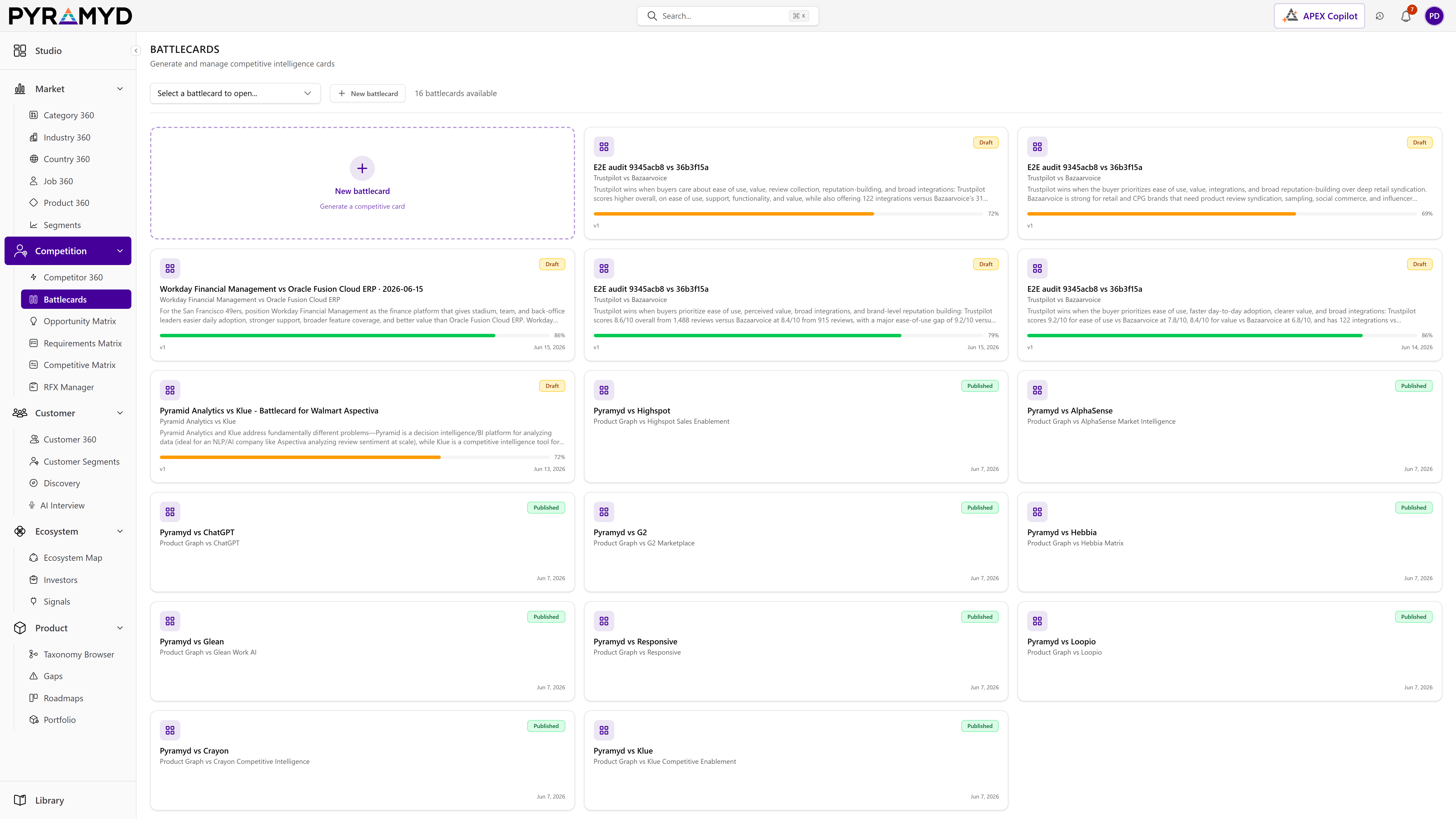
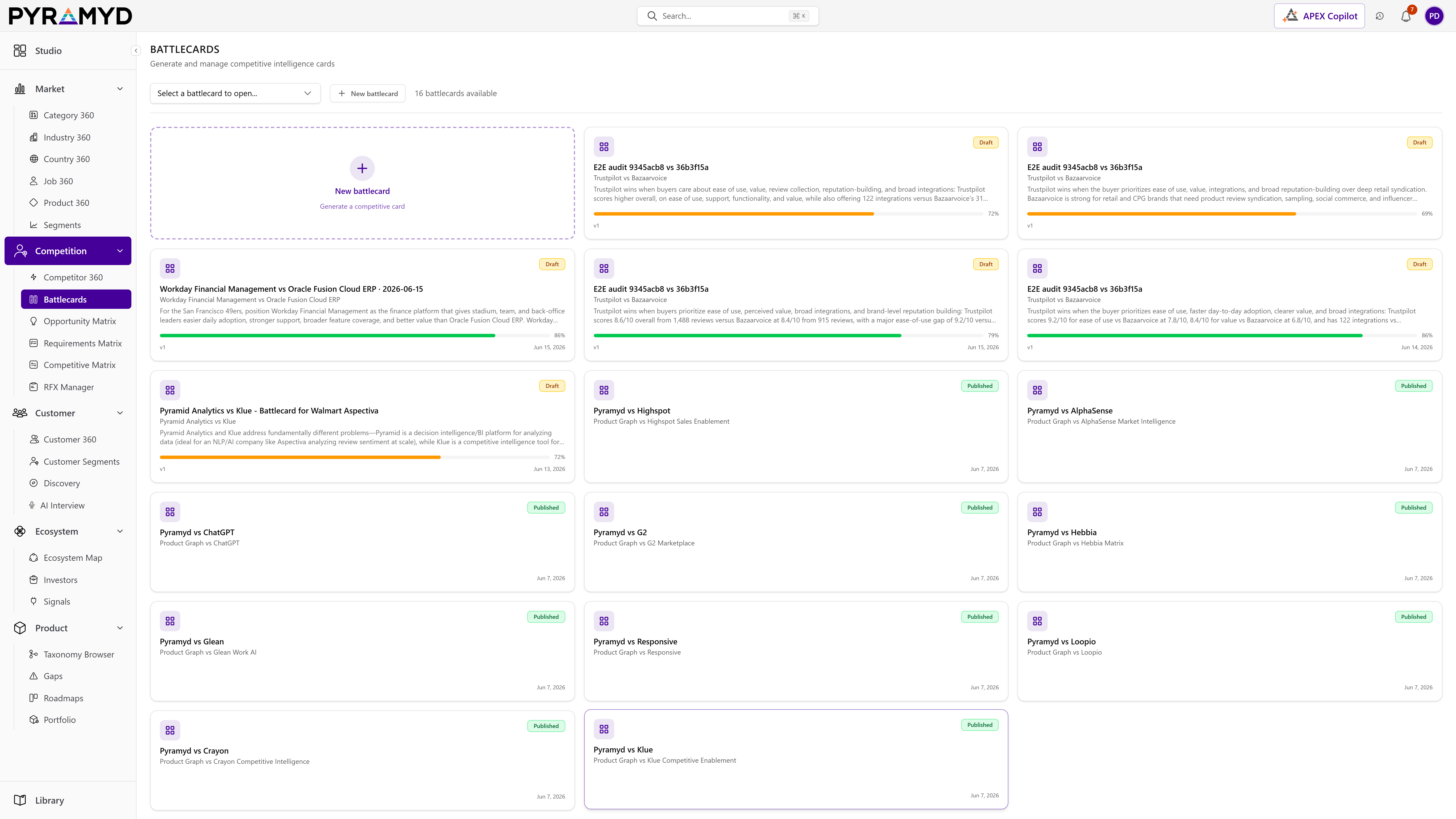
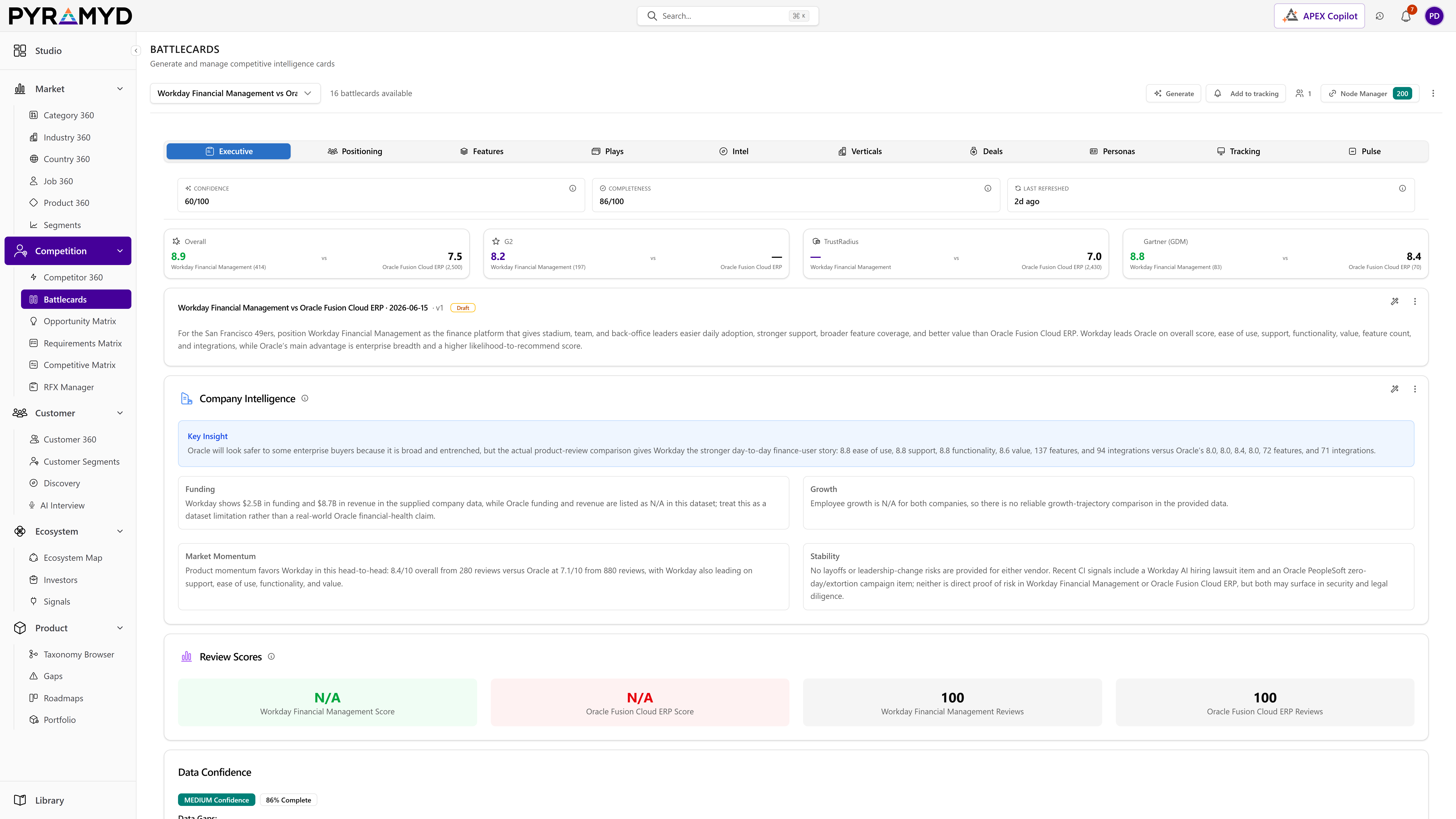
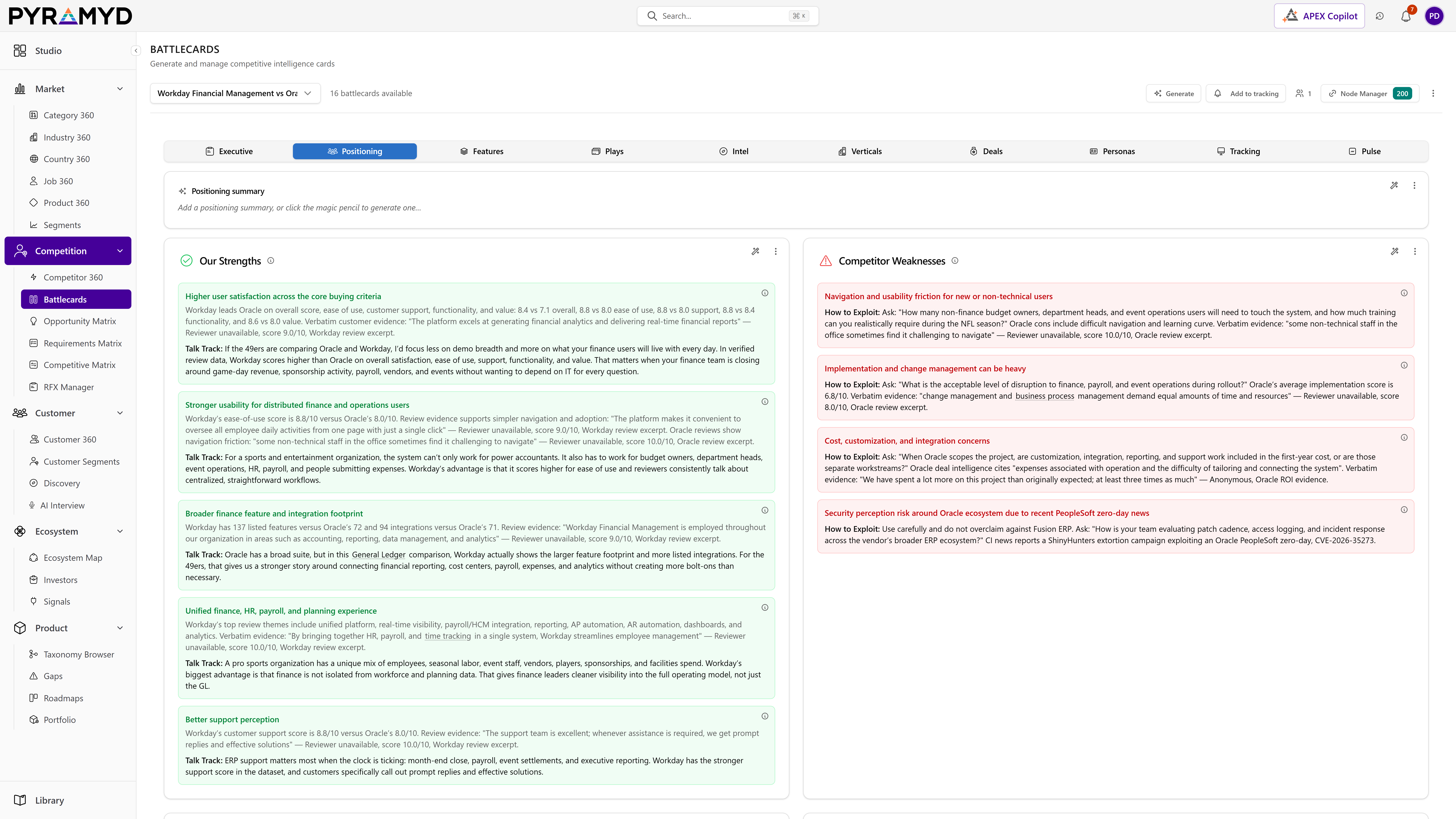
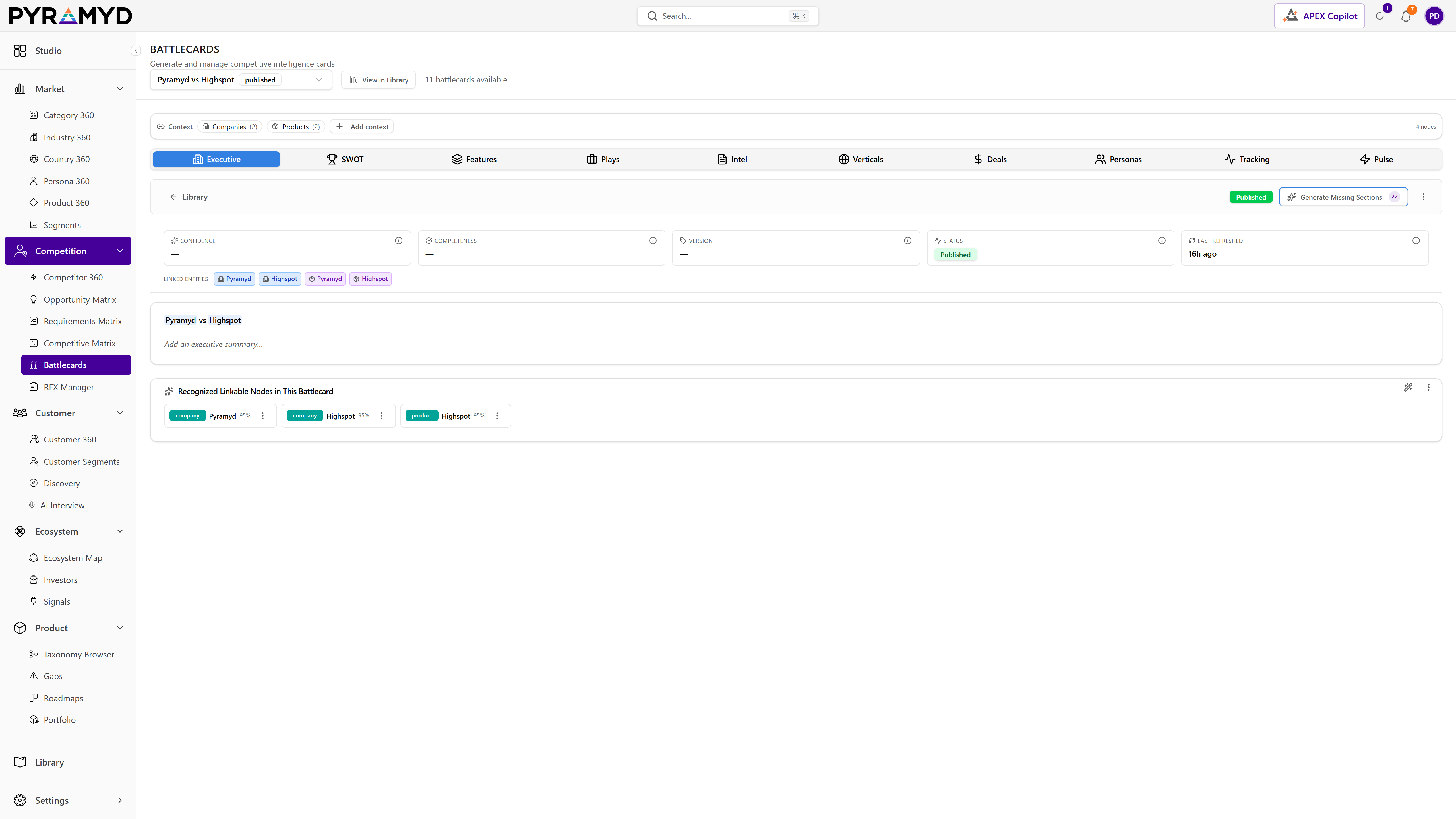
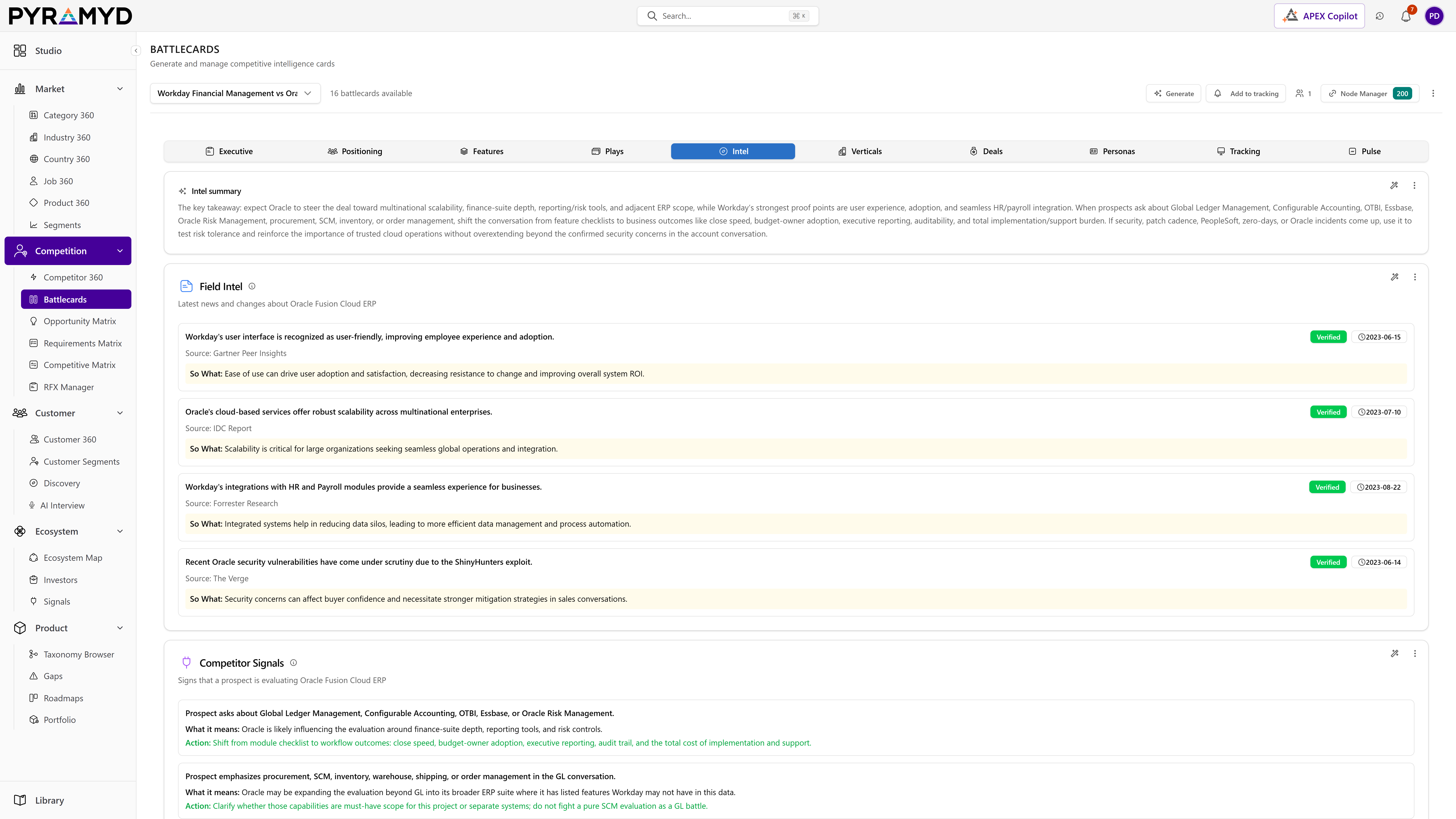
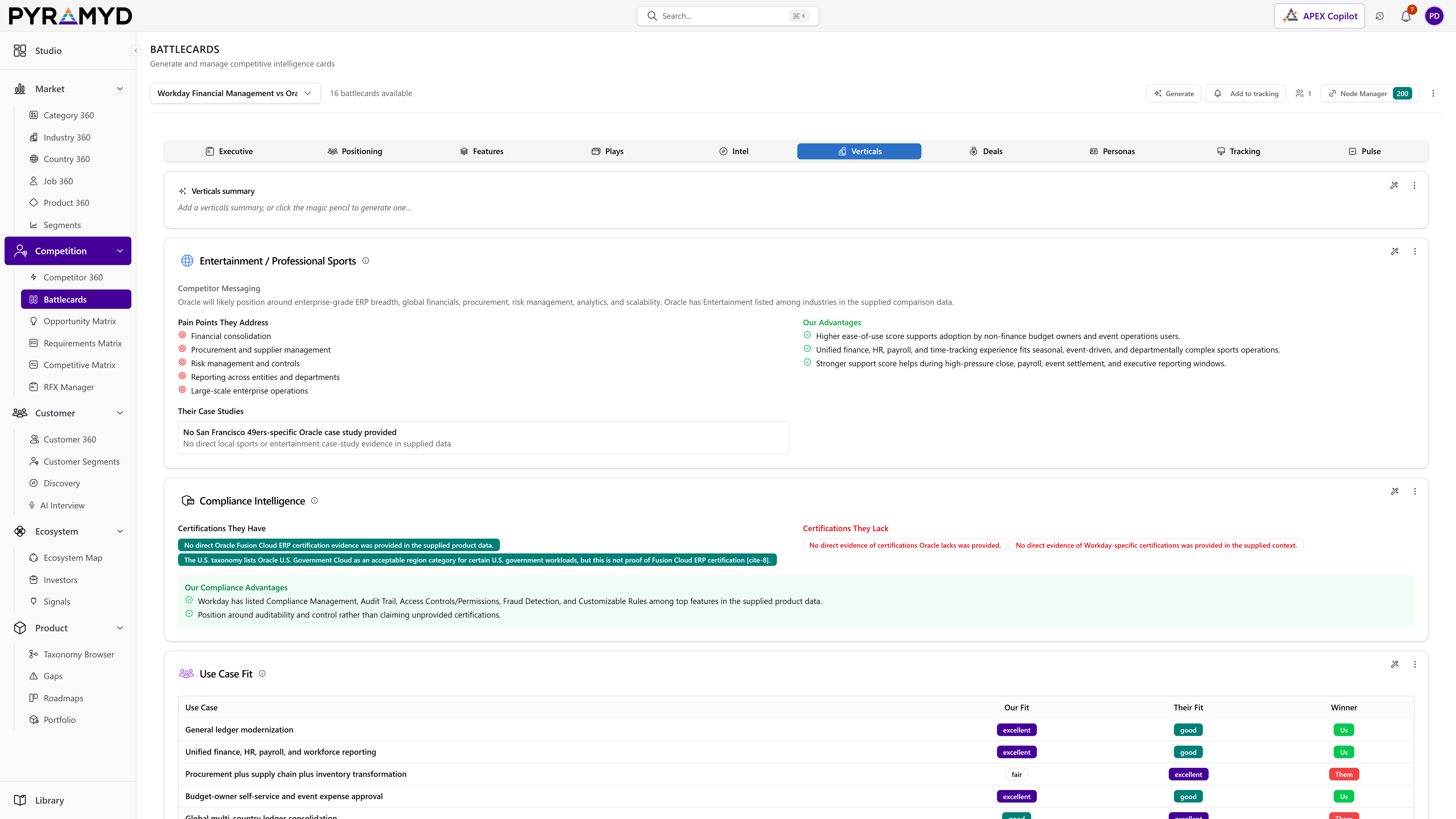
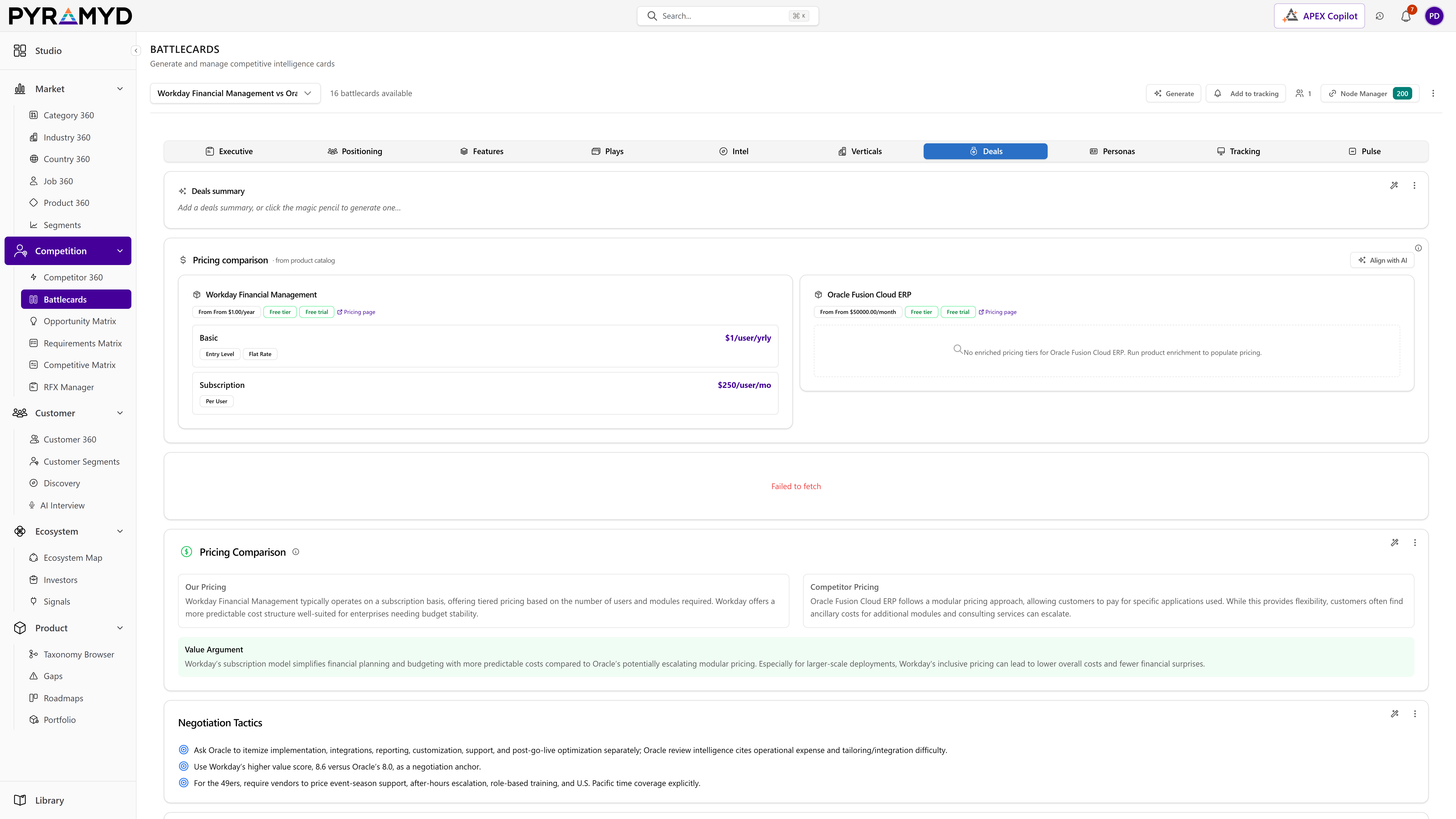
Battlecards for Product Graph produces narrative, data-grounded comparisons between two products, companies, or categories and distributes them across web, chat, CRM, and a browser extension. A 4-column generator streams events through a two-LLM pipeline grounded in retrieval-ranked reviews, news, web scrapes, and six review-insight extractors. An 11-tab detail view supports per-section AI rewrite, inline editing with auto-save, linked-context nodes, role-based and matrixed content variants, and impact telemetry attributed back to CRM deals.

Top 5 capabilities

The most-built-out capability set.

Each capability is the parent of dozens of typed features in the production taxonomy. Hover any feature in Studio to drill into the underlying nodes.

01

AI Generation Pipeline

12 features

AI Generation Pipeline for Product Graph is the core /api/ci/battlecard POST that streams events back to the generator and saves on completion. The endpoint is wrapped with withUserRoute and withRateLimit and runs on the node runtime with a 120-second max duration. Before generating, it short-circuits to a 30-day cache. The primary LLM serves with json_object output and 90-second timeout; a fallback LLM runs with grounding tools, rotating API keys, and 60-second cooldown.

02

Bot Messaging Integration

11 features

Bot Messaging Integration for Product Graph ships a shared BotPlatform (chat platform) interaction layer in platform/apex/integrations/bots/shared/types.ts. BotInstallation carries customerId, platform, teamId, botToken (and expiry), refreshToken, botUserId, installedByUserId, featuresEnabled, defaultChannelId, alertChannelId, and isActive. Handlers include handleSearchBattlecards, handleViewBattlecard, handleEditBattlecard, handleFlagBattlecard, handleShareBattlecard, handleSubmitIntel, handleRecordWin and handleRecordLoss.

03

Feature Battleground and AI Scoring

11 features

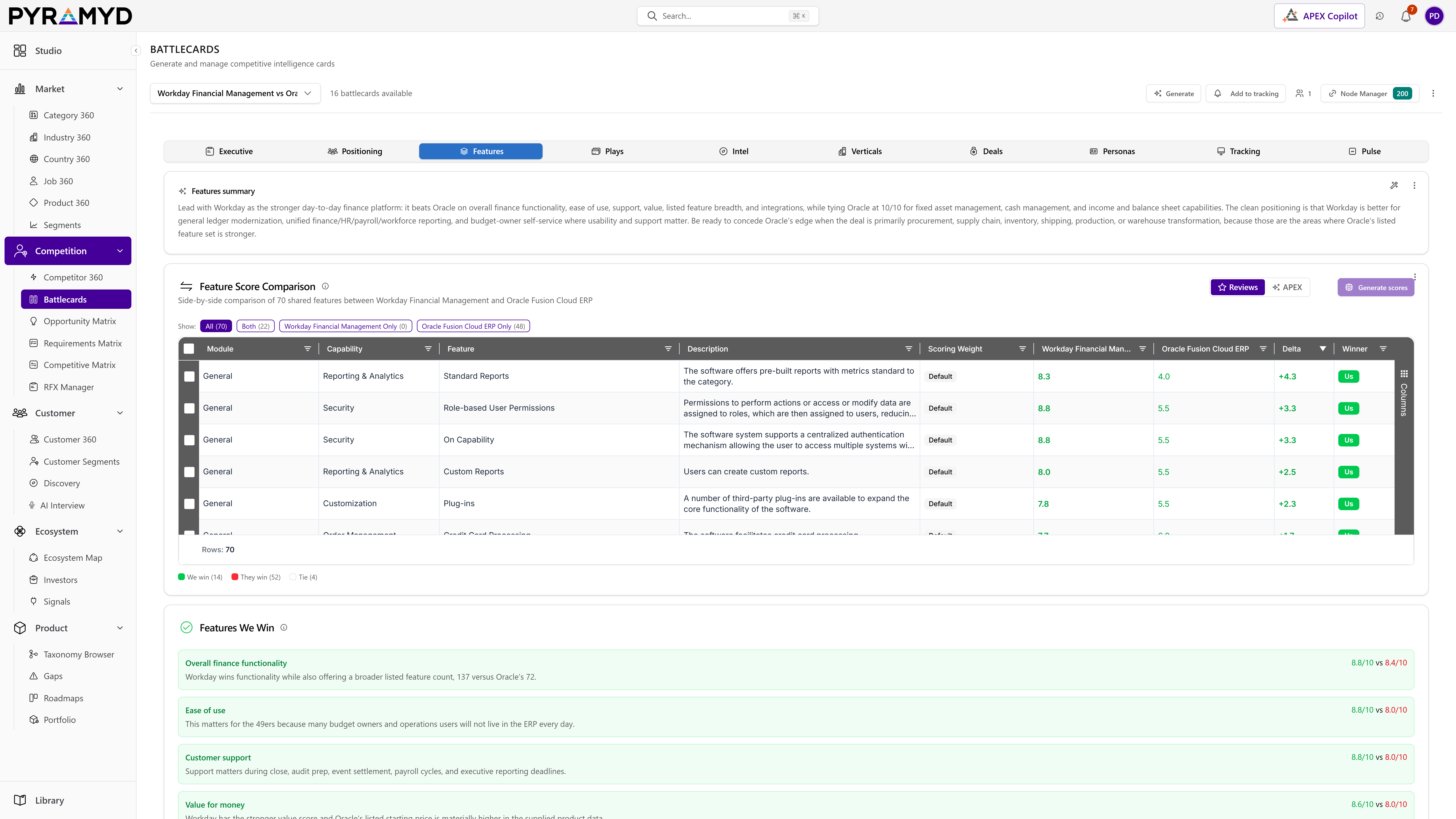
Feature Battleground and AI Scoring for Product Graph is the most data-dense surface: FeatureBattlegroundCard mounts a 400px data grid with pinned-checkbox, Module, Capability, Feature, Description, our score, competitor score, Delta, and Winner columns. A top toggle flips scoreMode between user-rated review scores and AI-generated scores; AI mode subscribes to useGlobalScoringSafe job streams. A weights dialog tunes 10 domain weights feeding calculateWeightedScore. Score-cell clicks open FeatureScorecardDialog with side-by-side analyses.

04

APEX Frontend Tools and Bridge

9 features

APEX Frontend Tools and Bridge for Product Graph wires APEX into the live battlecards UI. BattlecardsCopilotBridge calls useSetActiveEntityContext and useSafeAgentContext, then registers 7 useSafeFrontendTool actions: battlecard_select, battlecard_set_view, battlecard_create (confirmation-gated), battlecard_duplicate, battlecard_publish and battlecard_archive (both confirmation-gated), and battlecard_refresh. A separate useBattlecardActions hook registers 5 globally-available CopilotKit actions usable from any APEX surface.

05

Schema and Data Model

9 features

Schema and Data Model for Product Graph anchors persistence. user_battlecards (rationalised from the original battlecards) is a tenant-scoped 100+-column table with FK columns under the _fk convention (us_company_fk, them_company_fk, us_product_fk, them_product_fk, us_category_fk, them_category_fk, tenant_fk, team_fk, owner_fk, created_by_fk, updated_by_fk, published_by_fk, user_connector_fk, transformation_fk) plus standard columns deleted_at, custom JSONB, tags, is_deleted.

See Battlecards running against your category.

30-minute walkthrough. We'll filter the workspace to your category and walk through the top capabilities live.